Section
Swimming Pool Gear and Home Pumps
This section covers water you want to keep and water you want gone. On one side, the swimming pool: above-ground pools, pool pumps and filters, covers, cleaners, ladders and heaters. On the other, the home pumps: sump pumps for the basement, well pumps and pressure tanks, utility and transfer pumps. Every table shows what the maker or the listing states, and a dash where they don't. I'm Dell Pruitt. I fixed other people's heating and air for a living, and I still read every manual twice.
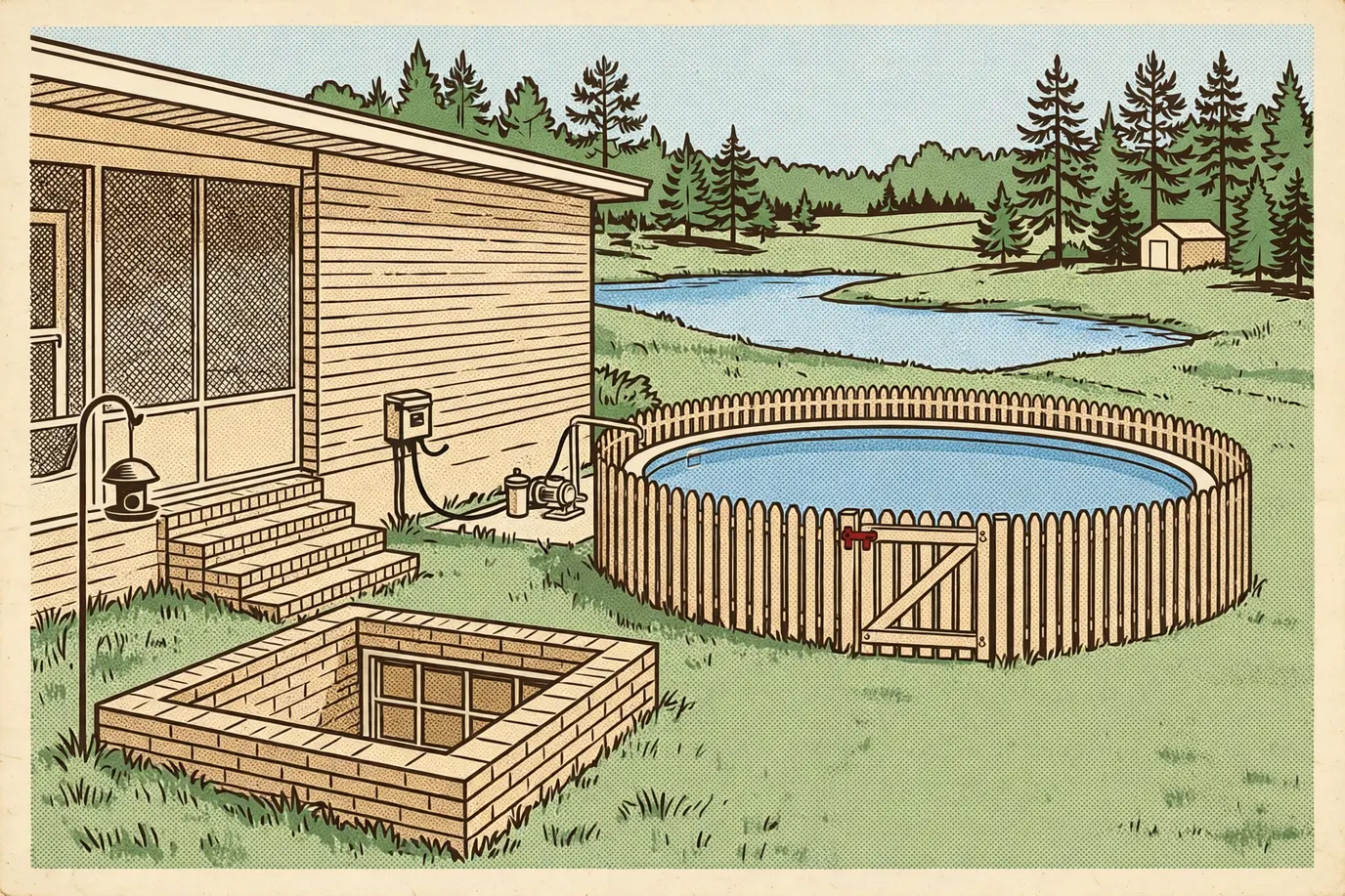
What’s in this section
Best-of lists
Best Sump Pumps for Your Basement
Primary sump pumps whose maker states the flow (GPH) and the switch type, highest stated flow first, at most two per brand and four per horsepower size. Flow is compared only as the maker lists it.
Brands in this section
What's in the swimming pool and pumps section
Two kinds of water run through this section. Pool water, which you paid to fill. And groundwater, which you'd pay to keep out. The equipment overlaps more than you'd think: both need a pump sized to the job, both need a clean electrical setup, and both punish you for skipping the manual.
So the section is grouped three ways: pools, pool equipment and home pumps. The cards above show every type page that's open now. More open through the year, and pool pages come out in late spring, when people start asking.
Every pump table on this site shows the same three things when the maker states them: horsepower (HP), flow in gallons per hour (GPH) at a stated lift, and the switch type. Lift, also called head, is how high the pump pushes the water. Flow drops as lift rises, so a GPH number without a lift next to it doesn't tell you much. If a listing gives flow in gallons per minute, we show it as the maker wrote it. We don't convert it ourselves.
Pools: above-ground, inflatable and kiddie pools
"Small above-ground pool" on this site means up to 12 feet across. Past that, you're in family-pool territory, and the ground under it matters more every foot you add.
The pool pages sort by what the maker states: shape, size, depth, wall type and water capacity. There are three common ways an above-ground pool holds its shape:
- Frame pools: a liner hung on a metal frame
- Metal-wall pools: a steel or aluminum wall with a liner inside, closer to permanent
- Inflatable or easy-set pools: an inflated top ring that rises as the pool fills
Kiddie pools, dog pools and inflatable hot tubs have their own pages as they open.
Above-ground pool ideas start with the ground
Most of the pool pictures people save are about decks, lights and landscaping. The part nobody photographs is the ground. Here's my one opinion on this page: for an above-ground pool, the ground does more for the pool's life than the pool does. Level, firm, no roots, no slope. Every pool maker's manual asks for some version of that, and each one says how it wants the site prepared and what can go under the liner. Read that page before the box arrives, not after.
Here's the one family story for this section. In 2023 Ken and Maya picked out a spot in their Greensboro backyard for an above-ground pool kit. The spot "looked flat." I brought over a ball of string and two stakes, ran a string line across it with a line level, and the string said otherwise: a slope you couldn't see standing on it. They picked a new spot and started over.
Ken's take: "I lost that argument before I finished making it." He builds cabinets for a living. He knows what a level is for. He just didn't expect his lawn to need one.
A string line costs less than a sandwich. A pool full of water on a slope puts more weight on the low side than the high side, and the manual will tell you that's not what it was built for.
Pick a spot you can see from the house. Plan the fence and the gate with the pool, not later. A pool next to a deck needs its own barrier thinking, because a deck can turn into a ladder.
Never leave a child alone in or near any pool, even for a moment, and keep an adult watching who can swim. Follow the maker's limits, use the ladder and barrier rules in your town's code, and never dive into an above-ground pool.
Pool Safely, the Consumer Product Safety Commission's campaign, asks for one adult "water watcher" who does nothing else while children are in or near the water, a fence at least 4 feet tall on all sides, and a gate that closes and latches on its own. It also says never to use a pool or spa with a loose, broken or missing drain cover, and to learn CPR. Those rules apply to a 6-foot inflatable as much as to a big metal-wall pool.
Pool equipment: pumps, filters, covers and cleaners
The equipment group is where most pool money goes after the first summer.
- Pool pumps and filters. The pump moves the water. The filter cleans it. A cartridge filter is rinsed or replaced. A sand filter is backwashed, which means running water backward through it to flush the dirt out. Size both to the pool's capacity the way the pool maker says.
- Covers. Winter pool covers keep debris out over the off-season. Solar covers float on the water and hold heat in summer. Neither is a safety cover unless the maker says so in plain words.
- Cover pumps. Pool cover pumps sit on a winter cover and pump rainwater off it, so the cover doesn't sag or tear.
- Cleaners and skimmers. A skimmer catches debris at the surface. A robotic cleaner is a self-contained vacuum that drives itself around the floor.
- Ladders, steps and heaters. Ladder and step weight limits come from the maker. Gas heaters need a licensed installer for the gas line and venting.
Pool chemicals are not dosed on this site. The label on the container and the pool maker's manual are the only dosing instructions worth following.
Home pumps: sump, well, utility and transfer
This is the part of the section I'd write even if nobody read it. Every house with a basement, a crawl space or a well depends on one of these pumps. Nobody thinks about them until the day they stop.
- Sump pumps and submersible sump pumps: the pump in the basement pit that moves groundwater out
- Battery backup sump pumps: a second pump or a battery system that runs when the power doesn't
- Well pumps, submersible well pumps and shallow well pumps: the pump that brings well water into the house
- Utility pumps and water transfer pumps: portable pumps for moving water from one place to another, like a flooded window well or a water heater you're draining
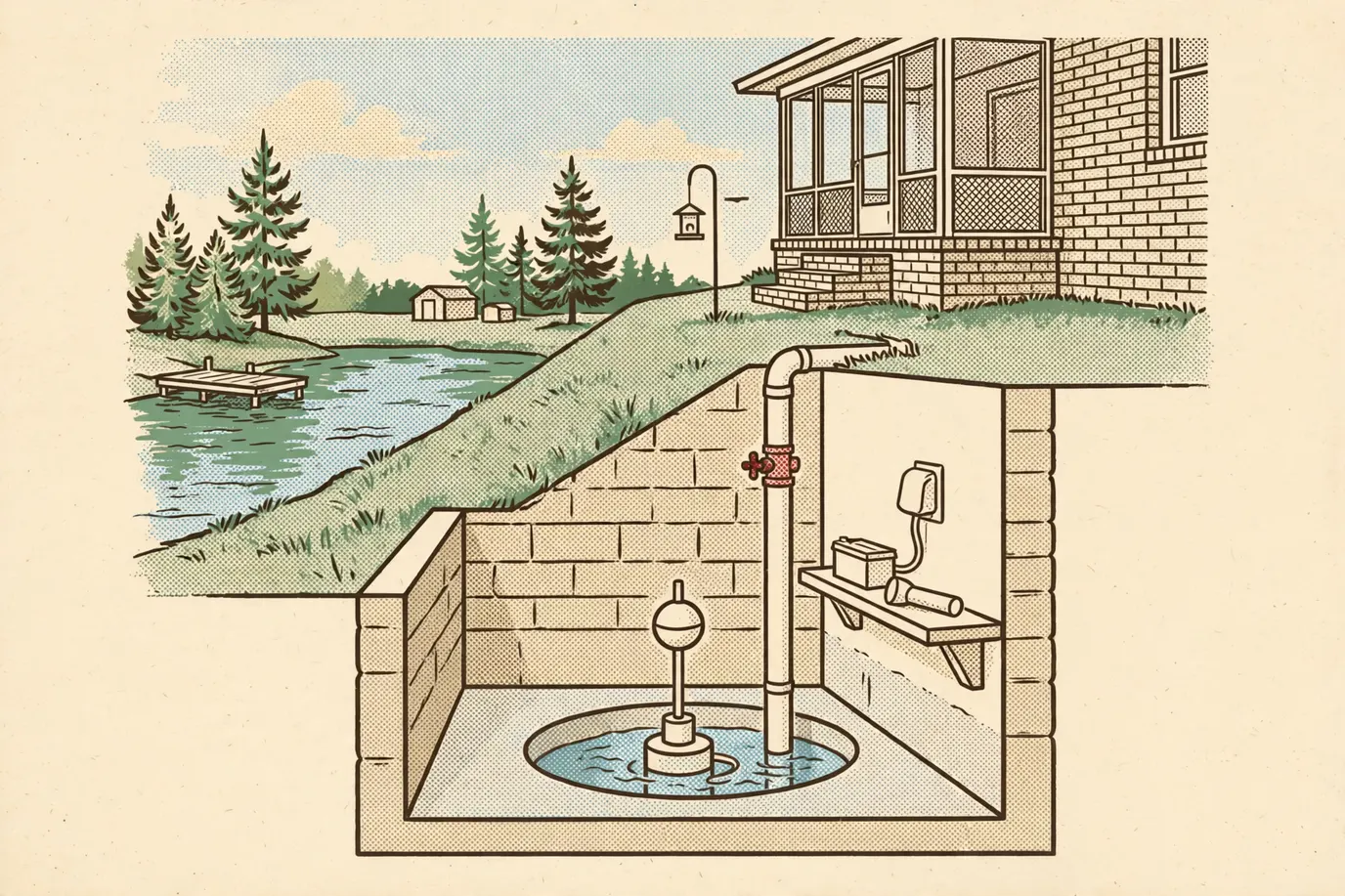
For sump pumps, read the HP, the GPH at the listed lift and the switch type. The switch is what turns the pump on as water rises: a tethered float, a vertical float on a rod, or an electronic sensor. Then measure your pit's width and depth, because a float that hits the pit wall can't do its job. If you're new to all of it, start with the guide to what a sump pump is and then how long sump pumps last.
Well pumps are a different animal. A well pump job usually means pulling a pump from a well, wiring it and setting a pressure switch, and that's a call for a pro. Our well pump pages help you understand what's in the hole and what the well company is talking about.
Backups, alarms and checking the pit
A primary sump pump runs on house power, and the storms that fill a sump pit are the same storms that take the power out. That's what the two add-ons on the pump pages are for. A battery backup sump pump is a second pump, or a battery system, that takes over when the power fails. A high-water alarm sounds when the water rises past where the main pump should have started. Backup run time, battery type and alarm type appear in our tables only as the maker lists them.
The cheapest check costs nothing. Every few months, and before a big storm, lift the pit lid and look. Is the float free to move? Is the discharge pipe clear where it leaves the house? Does the pump start when you slowly pour a bucket of water into the pit, the way the maker's manual describes? If the answer to any of those is no, you'd rather know on a dry Tuesday than at 2 a.m. in a thunderstorm.
Ana says I check the sump pit more than the weather report. In my defense, the weather report has been wrong before.
Electricity and water
Pool pumps, sump pumps, cover pumps, fountain pumps and pond pumps all put electricity next to water. A ground fault circuit interrupter, or GFCI, is the device that makes that safer. The Consumer Product Safety Commission's GFCI fact sheet describes it as monitoring the current in a circuit and cutting power faster than a blink of an eye when the current leaks out somewhere it shouldn't, such as through a person. It also says to test each GFCI at least once a month, after a power failure and as its maker says: press the test button, confirm the power cuts off, then press reset.
Plug water equipment only into a GFCI-protected outlet, unplug it before you touch the water or the pump, and leave hard-wired installs to a licensed electrician.
Don't run a pump on an extension cord unless the pump's maker says you can, and then only the kind the manual names.
When you don't need anything here
If your basement has never had water, your house has no sump pit and your gutters work, you don't need a sump pump. You need to keep cleaning the gutters. If you're on city water, skip the well pages. And if you're thinking about a pool but can't put a fence and a self-latching gate around it this year, wait a year. The pool will still be for sale.
If none of that applies to you, go sit on the porch. It's a good night for it.
Related
Guides
Questions people ask
How do I winterize an above ground pool?
Follow your pool maker's winterizing steps, in order, because they differ by pool type. Most manuals cover the same ground: clean the pool and balance the water, lower the water level only as far as the manual says, drain and store the pump, filter and hoses indoors, and put on a winter cover sized for your pool. Treat the water only as the chemical label says.
How do I close an above ground pool for the season?
Closing is winterizing by another name. Read the pool maker's manual first: some frame and inflatable pools are meant to be drained and taken down, not closed with water in them. If yours stays up, plan to keep the cover clear of standing water all winter. A pool cover pump does that job, and it needs a GFCI-protected outlet like any pump.
How do I open an above ground pool?
In reverse. Pump the water off the cover before you take it off, so the dirty water doesn't end up in the pool. Clean and put the cover away dry, reconnect the pump, filter and hoses as the manual shows, check the fence, gate and ladder, then run the filter and test the water before anyone swims.
What goes on a pool opening checklist?
The barrier and the ladder come first: check that the fence is whole, the gate closes and latches on its own, and the ladder or steps are secure and can be removed or locked when nobody's swimming. Then the equipment: hoses, clamps, pump, filter and the GFCI outlet the pump plugs into. Test the GFCI with its button. Water chemistry comes last, by the label.
What is a sump pump?
A sump pump sits in a pit in the lowest part of a basement or crawl space and pumps out groundwater before it reaches the floor. A float or a sensor turns it on as the water rises. Most are submersible, with a sealed motor that sits in the water; a pedestal pump keeps its motor above the pit. Our guide to what a sump pump is covers it in full.
Sources
- Pool Safely (U.S. Consumer Product Safety Commission): Safety Tips — accessed 2026-10-24
- U.S. Consumer Product Safety Commission: CPSC Fact Sheet — What Is a GFCI? (Pub. 099) — accessed 2026-10-24