How this best sump pump list is built
The rule is short. A pump makes the list if it's a primary sump pump and its maker states two things: the flow in gallons per hour (GPH) and the switch type. Then the list runs from the highest stated flow down.
Two caps keep it from turning into one brand's catalog. No brand gets more than two spots, and no horsepower size gets more than four. Two per brand, and nobody past two. Nobody gets a third helping at Sunday dinner either.
A few things the list doesn't do:
- No ranking by price, and no prices on the page
- No star ratings or review counts
- No testing claims; nobody here ran these pumps
- No unit conversions; flow stays as the maker lists it
- No brand preference in the order
The data date for this list is 2026-10-31. Listings change, so the table updates as they do. The sump pumps page shows every live model; the notes under this table follow the same order and give one fit and one trade-off for each pump, taken from the listing.
What the table tells you, column by column
Sump pump listings pile on words. The table keeps the numbers that decide whether a pump fits your basement:
- HP (horsepower): the motor size
- Flow (GPH): gallons per hour, as the listing states it
- Max head: the height where the pump's flow runs out
- Switch: what turns the pump on as the water rises
- Housing: the body material the listing names
- Discharge: the outlet size the pipe connects to
A dash in the table means neither the maker nor the listing states that value. A dash isn't a bad mark. It's a question to answer from the manual before you buy.
A flow number without a lift is the top of the chart
Here's the thing about GPH. A single flow number in a listing title rarely says how high the pump was pushing when it moved that much water. Lift, also called head, is how high the pump raises the water, from the pit up to where the pipe leaves the house. Flow drops as lift rises.
NDSU Extension explains that most new sump pumps come with a chart or graph, in the instructions or on the box, showing flow against height of lift. One maker's spec page for a 1/2 HP pump shows how much that matters: a maximum capacity of 6,000 GPH, and 4,140 GPH at 10 feet of lift.
So the order in this list is the order of the numbers makers put up front. It isn't the order the pumps will run in your basement. To compare two pumps fairly, find each one's flow at your lift on the maker's chart, in the same unit.
A GPH number with no lift next to it is like a speedometer that only shows top speed, measured downhill.
How to choose the best sump pump for your basement
Four things decide it, in this order: how fast your pit fills, how high the water has to climb, how wide the pit is, and what happens when the power goes out.
Start with 1/3 HP, and move up for fast water
NDSU Extension says there's no single correct size. The drainage area that feeds the pit, the depth to groundwater and the depth of the basement all play into it. Its baseline: a 1/3 HP pump is satisfactory for most houses. The City of Edmonton's buying checklist sets the same floor, a minimum of 1/3 HP.
The case for the best 1/2 HP sump pump is a pit that fills fast. NDSU says that in similar conditions a 1/2 HP pump moves more water and lifts it higher than a 1/3 HP pump. It also says that where water comes into the pit slowly, the larger pump has no advantage. Where the flow can turn rapid, the 1/2 HP pump may keep up where the 1/3 HP may not.
Watch your pit through one hard rain before you decide. The sump pump sizing guide walks through it. If it fills slowly and the pump rests between runs, a 1/3 HP pump is a fair starting point. If it fills fast and the pump barely gets ahead, look at 1/2 HP and up.
Match the switch to your pit
Every pump here lists one of two switches.
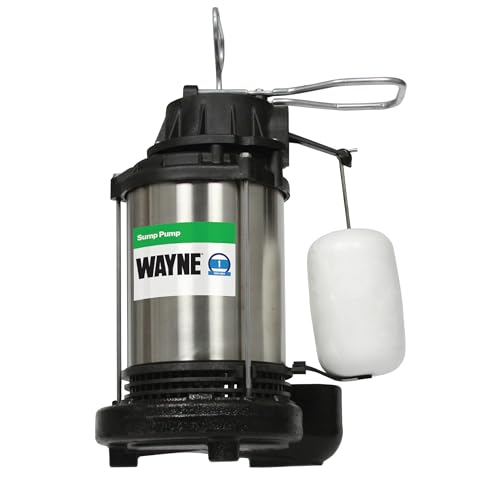
- Vertical float: a float that rides up and down a rod on the side of the pump
- Tethered float: a float on a short cord that swings up as the water rises
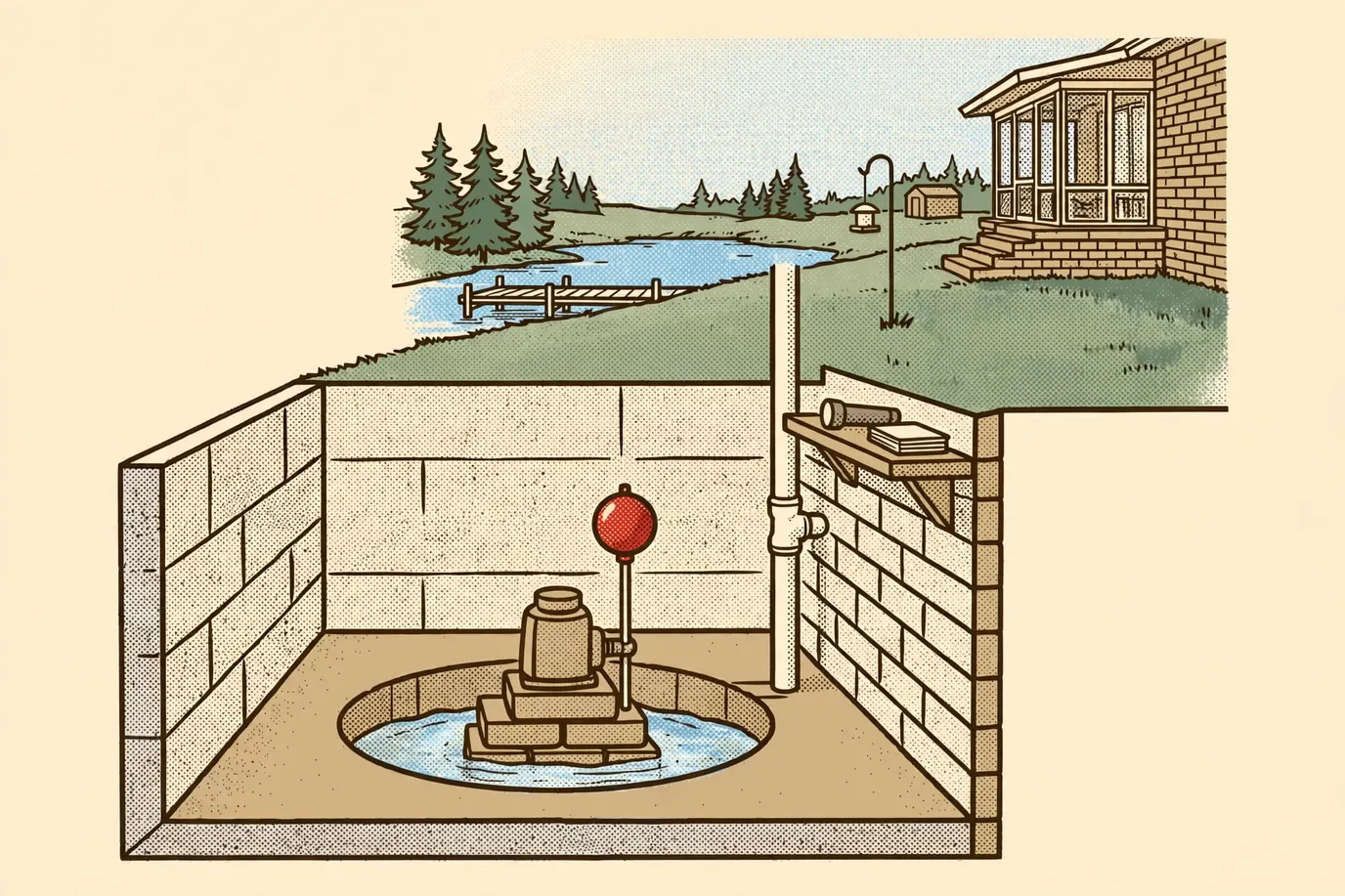
A tethered float needs room to swing without touching the pit wall. The maker spec page above lists a 14-inch minimum sump diameter for its tethered-switch pump. A vertical float stays close to the pump body. Before you order, measure your pit's width, then find the minimum basin size in the manual of the pump you're looking at.
Most pumps in this list have a vertical float. The ones with a tethered float are noted in the pick notes.
Check the max head against your own lift
Measure from the water level where the pump turns on up to where the discharge pipe leaves the house. Edmonton's checklist describes pump head as the distance from the sump level to the pipe's exit, and puts its minimum at about 10 to 12 feet. It counts the distance the water travels, too, so a long run across the yard adds to the job.
The listed max head is where the flow stops. A pump at its max head is working hard and moving little. Pick one whose max head sits well above your measured lift, then read the flow at your lift on the chart. Where a listing in this list doesn't state a max head, the table shows a dash.
Size the discharge to your pipe
Edmonton's guide calls for a 1 1/4-inch discharge line. The pumps here that state a discharge size list 1-1/2 inch or 2 inch. Check your existing pipe before you order, and fit the pump the way its manual shows.
Cast iron, stated
If you're hunting for the best cast iron sump pump, most of this list qualifies on paper. Most listings state a cast iron housing, a few with steel or stainless steel added. Where a listing doesn't state a housing material, the table shows a dash. We don't rank by material, because none of the sources we read compares how housings hold up over time.
Quiet pumps start with the style
None of these listings gives a noise level in decibels, so there's no fair way to name the best quiet sump pump by number. Community Association Underwriters of America, an insurer, says submersible pumps are much quieter than pedestal pumps, whose motors stand above the pit. Every listing here that states a pump style says submersible, apart from the one sold as a primary and backup combo.
A backup or an alarm belongs with any of these
My one opinion on this page: a battery backup or a high-water alarm is part of a sump setup, not an extra. The reason is in the City of Ann Arbor's list of why primary pumps fail. Loss of power comes first, from a blackout, a blown fuse, a tripped breaker, a damaged cord or a pump that's been unplugged. A stuck float, a burned-out pump, a clog, a failed check valve, a blocked pipe and more water than the pump can handle round it out. Many of those show up during storms, which is when the pump is needed.
Ann Arbor is fair about it. It says not everyone needs a backup, that backups add expense, maintenance and complexity, and that your own risk decides it. Its questions are worth a minute: do you lose power often, has the basement flooded before, and how often are you home to check?
The backup choices, as Community Association Underwriters of America and Ann Arbor describe them:
- Battery backup: a second pump set higher in the pit, run from a rechargeable battery
- Water-powered backup: a second pump driven by the home's water pressure
- High-water alarm: a warning when water rises past the level that starts the pump
- Second pump on hand: a spare with its own riser and check valve, ready to swap in
- Generator: sized and connected by a licensed electrician
A pump listed as a primary and backup combo carries that note in the table. For the rest, the battery backup sump pumps and sump pump alarms pages cover the add-ons.
Ana's ruling: a pump with no backup is a pump with a lot of faith. She's a librarian. She keeps a second copy of everything.
Sewage, effluent and sump: read the listing's own words
Some listings in this table describe themselves as more than sump pumps. A listing may name sewage and effluent use, with septic tanks among its uses, or sewage and wastewater drainage, alongside the basement. The pick notes flag those.
That's the maker's description, and we report it as written. If you want a pump sold just for clear groundwater in a sump pit, pick one whose listing names only that job. If you need a sewage ejector pump for a basement bathroom, that's a different job with its own rules, and a plumber should size it.
Who should skip this list
Not every house needs a sump pump.
- No pit, and the basement has never had water. You don't need a sump pump. You need a gutter check, downspouts that carry water away, and soil that slopes away from the foundation.
- A pit with a working pump. Test it before you replace it. NDSU's test: pour about 5 gallons into the pit slowly and watch the pump turn on and off at least twice.
- A crawl space or a shallow pit. Check crawl space sump pumps instead; this list is for basement pits.
- You only need water off the floor once. A utility pump fits that job better than a pump built to live in a pit.
The NDSU page adds one more thing to know before buying. It says almost all sump pumps come with a tool list and directions, and replacing one shouldn't be difficult for the average person. The wiring is another matter. Leave any hard-wired or new-outlet work to a licensed electrician.
How we picked
We started with every live sump pump listing in our data on 2026-10-31. We kept primary pumps only, which leaves out standalone battery backups, alarms, switches and pump parts. A pump stayed in if its maker or listing states the flow in GPH and the switch type. Then we sorted by stated flow, highest first. We kept the first two from each brand and the first four at each horsepower size.
Every value in the table and the notes comes from the maker or the Amazon listing, shown as stated. Flow is compared only as the maker lists it. We don't turn gallons per minute into gallons per hour, and we don't guess a missing max head. Price plays no part in the order, and the page shows none.
The list can change from week to week as listings come and go. The rule stays the same. If a pump leaves, the next one by stated flow takes its spot.
Read the plate first. Then read the chart at your own lift.