Section
Cabinet Hardware, Knobs, Pulls and Vanities
This section covers cabinet hardware and the bathroom around it: kitchen cabinet knobs and pulls, hinges, bathroom vanities, mirrors and medicine cabinets. Every table shows the numbers the maker lists, like center-to-center spacing, overall length, finish name and how many come in a pack, or a vanity's width and whether the top is included. I'm Ken Abe. I'm a finish carpenter, and I measure first. Then I measure again, because the first time I was holding the tape upside down.
What’s in this section
Best-of lists
Best Bathroom Vanities, From 18 to 48 Inches
Vanities whose maker states the width and whether a top is included, spread across sizes — at most three per width and two per brand — narrowest first.
Cheap Bathroom Vanity Picks, Sale or No Sale
Vanities in the lowest price tiers in our data whose maker states the width, narrowest first, at most two per brand. Prices change on Amazon; we never print them.
Brands in this section
What's in the cabinet hardware section
Two rooms, one section. The kitchen gets the knobs, pulls and hinges. The bathroom gets the vanity, the mirror and the medicine cabinet, plus its own knobs and pulls. They share a section because they share a problem: everything has to fit something that's already on the wall.
The section is grouped in the order I'd do the job:
- Knobs and pulls
- Hinges
- Bathroom vanities
- Mirrors and medicine cabinets
The cards above list every type page that's open now. Finish and size pages, like matte black or 36-inch vanities, open when there are enough products listed to fill a real table.
Every number in our tables comes from the maker or the listing. If neither gives it, the table shows a dash. Nobody on this site claims to have installed the products listed. I install things for a living, but not these, and not for you.
Knobs and pulls: center-to-center first
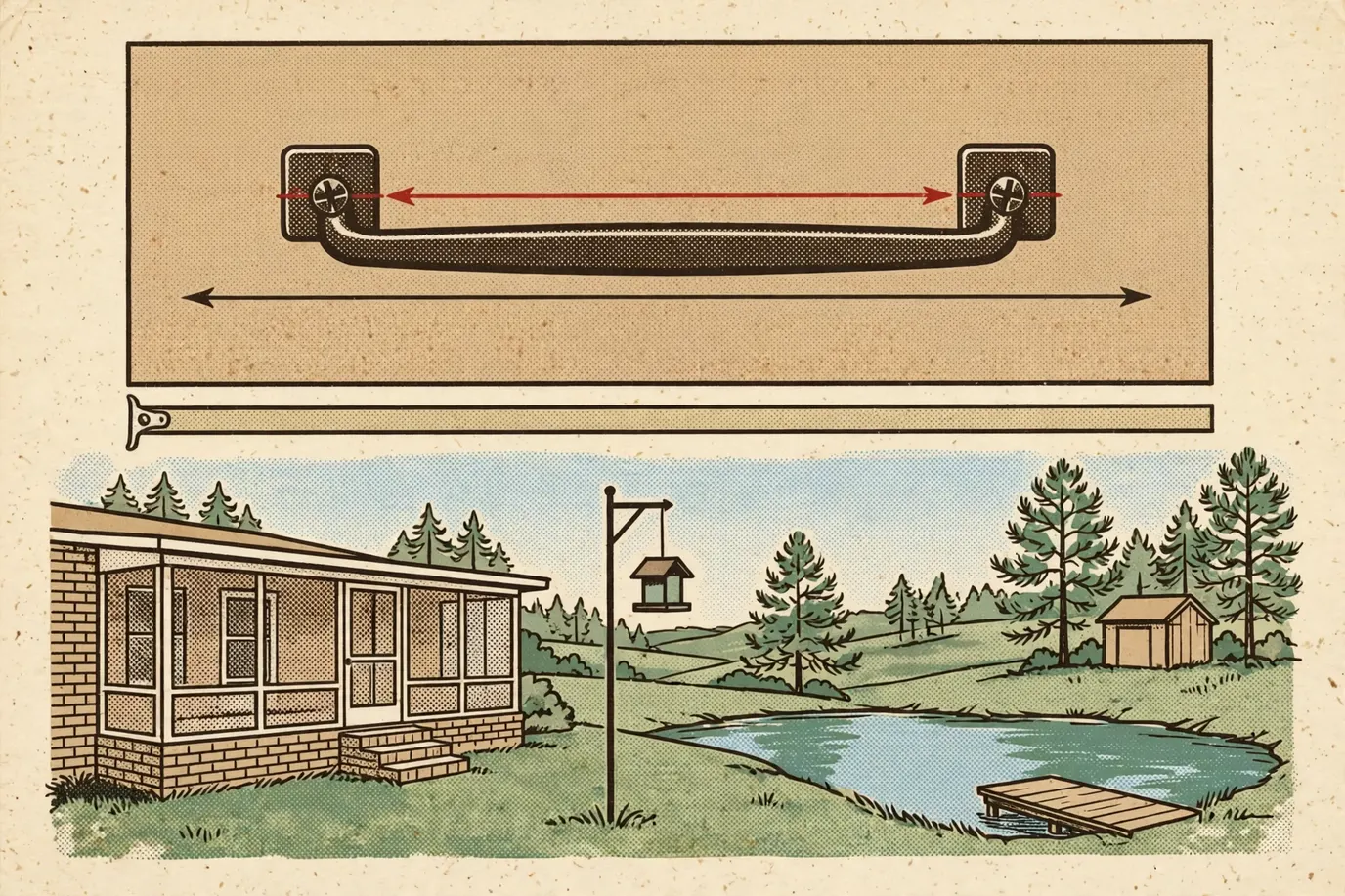
The one measurement that matters most in cabinet hardware is center-to-center, or CC. It's the distance between a pull's two screw holes, measured from the middle of one hole to the middle of the other. Not edge to edge. Not end to end.
Overall length is the other number. That's the pull from one end to the other, and it's always longer than the CC. When a listing gives both, we show both. Then the finish, by the maker's own name, and how many come in a pack.
- Cabinet pulls: bar, cup, edge and arch pulls, by CC and length
- Cabinet knobs: one screw, so no CC to match, just a diameter and a projection (how far it sticks out)
Here's my one opinion for this page. If you're replacing pulls, match the existing center-to-center. You skip the wood filler, the touch-up paint and the drill, and the job goes from a weekend to an afternoon. Measure two or three of your old pulls before you shop, because one kitchen can hide more than one spacing.
Knobs are the easy swap. One hole, one screw. The only catch is screw length: a thicker or thinner door than the knob was made for can leave the screw too short or too long. Most listings say what door thickness the included screws fit. If yours doesn't match, a hardware store sells the right length for less than a cup of coffee.
Forty-one pulls in one kitchen
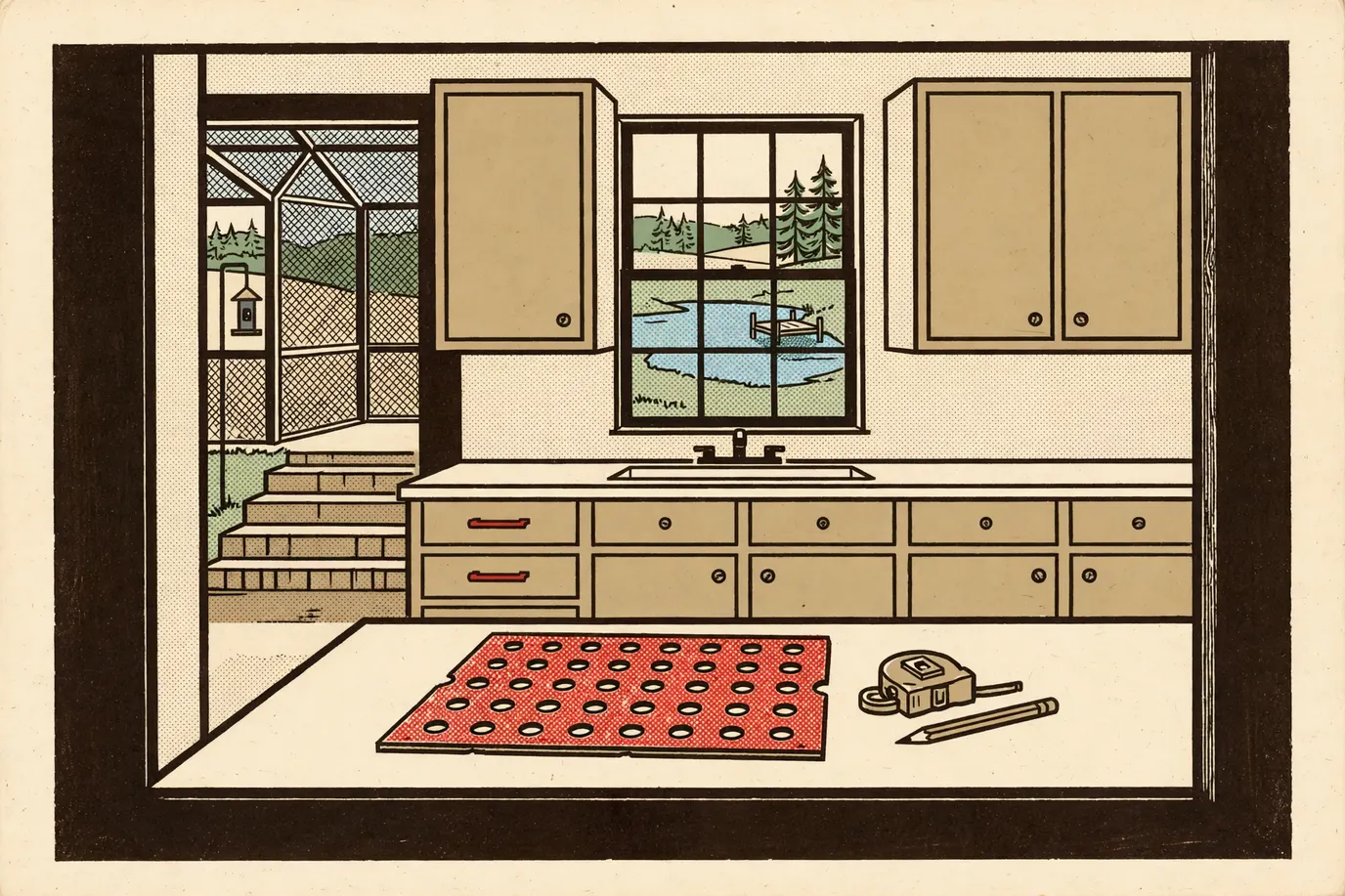
Here's the one family story on this page. When Maya and I moved into our 1962 ranch, I counted the knobs and pulls in her kitchen. Forty-one. I made a cardboard template from the old holes on the first drawer, figured I'd use it everywhere, and found out that one wall of cabinets had two different spacings. Same wall. Same decade, I think. Different idea about where the screw holes go. Somebody in 1962 was working without a template. I've forgiven him. Mostly.
So I made a second template, and I wrote the CC on both in marker. Every pull on that wall went back into its old holes, and nobody touched the paint. That's why I tell everybody to measure several drawers, not one. The template is a piece of cardboard. It takes ten minutes and saves the drill from doing anything it'll regret.
Maya's call, after the third dinner where I explained center-to-center: "Knobs on the doors, pulls on the drawers, and no more measuring at the table." She's right about the table.
Hinges: match what's on the door now
Hinges are the least exciting hardware in the kitchen and the most annoying to get wrong. A replacement hinge has to fit the hole or the mortise that's already there, so start by taking one old hinge off and looking at it.
- Concealed hinges: the cup-style hinges hidden inside the door, common on frameless cabinets. They sit in a round hole bored into the back of the door, and the cup size has to match that hole.
- Exposed hinges: visible on the outside, common on older face-frame cabinets. Here the screw pattern and the finish matter as much as the size.
- Overlay or inset: overlay doors sit over the cabinet frame; inset doors sit inside it. A hinge is made for one or the other, and the listing should say which. If it doesn't, we leave the cell blank.
- Soft-close: a damper that slows the door for the last inch. Some hinges have it built in, some take an add-on.
The hinge pages open through the year. Until then, take the old hinge to the store in your pocket. It's the best spec sheet you'll find.
Counting before you order
Kitchen cabinet hardware is a pack-count problem as much as a style problem. Before you order, walk the kitchen with a pencil and count:
- Doors, and how many knobs or pulls each one gets
- Drawers, and whether the wide ones get one long pull or two short ones
- The odd pieces: the trash pull-out, the appliance panel, the tiny drawer by the stove
- The CC on each kind of drawer, written next to the count
Then order a few extra. Packs come in set counts, and one screw always rolls under the fridge. (Beau has a theory that the fridge eats them. Iris has asked for evidence. So far, Iris is winning.)
Cabinet hardware styles, by name
Styles are where hardware shopping gets slippery, because the same word means different things to different makers. We sort style pages by what the listing calls the product, and we don't relabel it.
- Shaker cabinet hardware: plain knobs and simple bar or cup pulls that suit flat-panel shaker doors
- Farmhouse cabinet hardware: cup pulls, bin pulls and dark finishes, often listed with words like "rustic" or "vintage"
- Art deco and classic pulls: shaped or stepped pulls, backplates and polished finishes
- Knurled pulls: bar pulls with a cross-hatched, textured grip
A word on finishes. Finish names belong to the maker, and we print them exactly as listed. Two makers can use the same name for colors that don't look alike side by side. Hold a sample next to your faucet before you order a full set. Daylight and the bulb over your sink will both have opinions.
Bathroom cabinet hardware and vanities
Bathroom cabinet hardware is the same knobs and pulls, just on a vanity. Vanity drawers tend to be shallower, so pull length matters more. A long pull on a short drawer front looks like it wandered in from the kitchen.
The vanity itself is the biggest purchase in the section, and the one most likely to go wrong before it's even out of the box.
- Bathroom vanities: width, depth, height, whether the top is included and how many sinks, from the maker
- 30-inch bathroom vanities, double sink vanities and floating vanities
- Best bathroom vanities and cheap bathroom vanities, each built by a rule printed on the page
- The guide to bathroom vanity height
Before you buy one, measure the rough-in. That's where the drain and the water supply lines come out of the wall or the floor. A vanity's listed width is the box, not the room: check the door swing, the outlet height, the light above it and the clearance your local code asks for beside the toilet. And check what's included. Many vanities ship without a top, a sink or a faucet, and a few ship without the hardware. The listing usually says. Read it twice.
It's a two-person lift. Anchor vanities and cabinets to studs as the maker's instructions show.
Mirrors and medicine cabinets
- Bathroom mirrors and lighted bathroom mirrors: size, shape and frame from the listing; lighted mirrors also list how they're powered
- Medicine cabinets and recessed medicine cabinets: recessed means set into the wall between studs; surface-mount means hung on the wall's face
For a recessed cabinet, the stud spacing decides almost everything. Find the studs before you fall for a size. For a mirror over a vanity, measure the vanity's width and the space between the backsplash and the light.
A lighted mirror that plugs in should plug into a bathroom outlet with ground fault protection. The Consumer Product Safety Commission's GFCI fact sheet notes that bathroom receptacles have needed it under the National Electrical Code since 1975, so newer bathrooms usually have one. Older ones may not. A hard-wired mirror is a job for a licensed electrician.
Who doesn't need anything here
If your cabinets are fine and your hardware still works, you don't need new hardware because a picture told you to. Tighten the loose screws first; it's free. If your vanity cabinet is sound and only the top is chipped, look at vanity tops before you buy a whole new vanity. And if you're about to replace the whole kitchen, wait on hardware until the cabinets are in. Then measure.
Measure twice. Order once. Then count the screws.
Related
Guides
Questions people ask
What are some kitchen cabinet hardware ideas?
Start with the job, then the look. Knobs on doors and pulls on drawers is the plain, common layout. Pulls on everything reads more modern and is easier on hands. Mixing a finish on the island with another on the wall cabinets works if you pick them on purpose. Whatever you pick, buy one sample first and hold it against your cabinet in your own kitchen light.
What are the cabinet hardware trends right now?
We don't track trends, and we'd rather not guess. What our pages do show is what makers currently list on Amazon US: finishes, lengths and styles, with the maker's own finish names. Pick hardware you'll still like when nobody's calling it a trend. If you need a test, ask whether it fits the age and style of the house you actually live in.
What's the difference between bathroom cabinet hardware and kitchen hardware?
Mostly nothing. The knobs and pulls on a bathroom vanity are the same products as kitchen hardware, often in smaller sizes because vanity drawers are shorter. Two things to check: the drawer front height, so a pull isn't crowded, and the finish, since a bathroom faucet and towel bar sit right next to it. Our pull and knob pages cover both rooms.
Should I use knobs or pulls on my cabinets?
Either works. A common layout puts knobs on doors and pulls on drawers. Pulls take two screws, so they need a center-to-center measurement; knobs take one, so swapping a knob is the easiest job in the section. Long drawers often get two knobs or one long pull. If you're replacing old hardware, the holes you already have usually make the choice for you.
Sources
- U.S. Consumer Product Safety Commission: CPSC Fact Sheet — What Is a GFCI? (Pub. 099) — accessed 2026-10-24