Baby humidifier picks, quietest stated first
Every unit on this list meets three conditions from its maker or its Amazon listing:
- Cool mist or evaporative, never warm mist or steam
- An automatic shut-off the maker states
- A noise level in decibels the maker states
The list is sorted quietest stated level first. For scale, the CDC's NIOSH noise chart puts a whisper at 30 dB and normal conversation at 60 dB. Makers don't always say how they measured, so the numbers are good for comparing one unit with another, not for predicting what you'll hear in your house.
Here's how the picks fall:
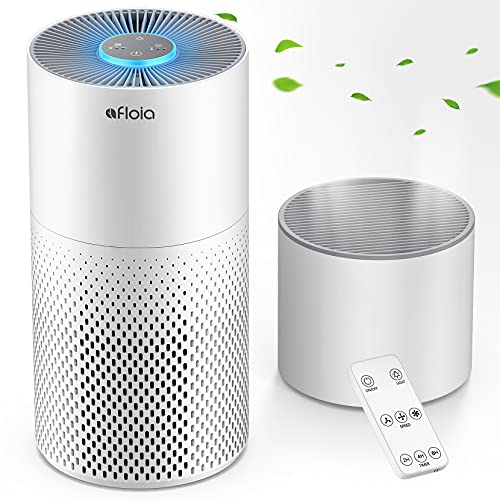
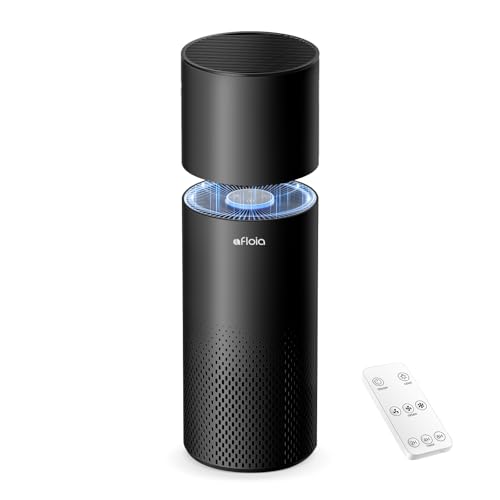
- 22 to 24 dB: the two Afloia units, both evaporative, both sold as a humidifier and air purifier combined
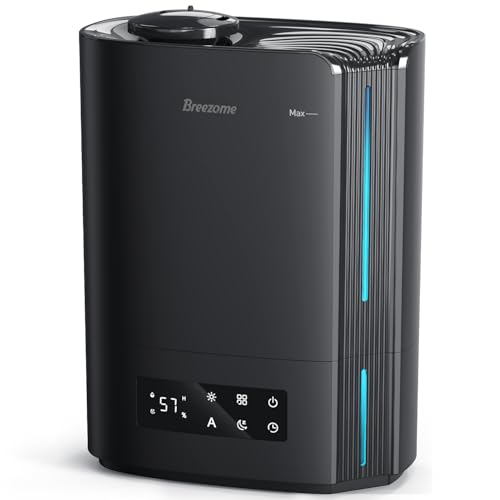
- 25 to 26.5 dB: the AEOCKY, both BREEZOME units and the Homedics, all ultrasonic cool mist
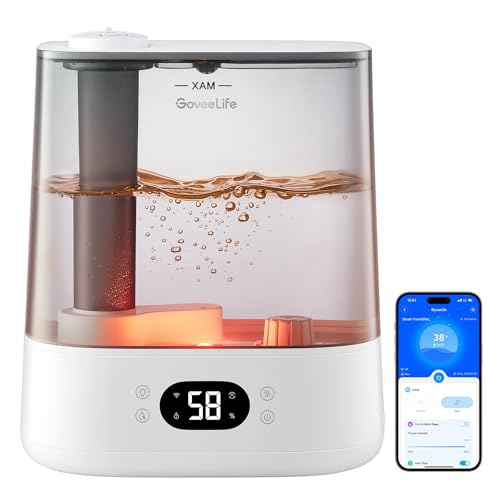
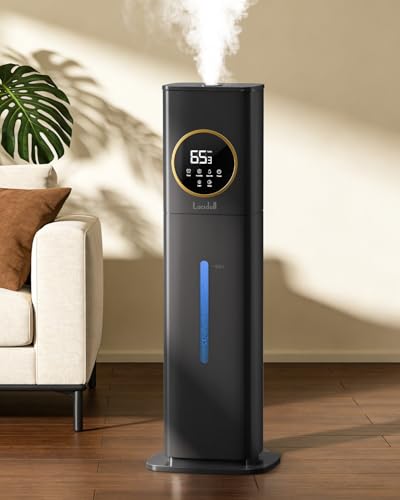
- 28 to 30 dB: the Everlasting Comfort, the GoveeLife and the Lacidoll, the Lacidoll with the largest tank here at 2.1 gallons
Where a listing doesn't state a tank size or coverage, the table shows a dash. The two Afloia listings in our data don't state either.
Why warm mist is left out
This is the one rule on the page that isn't about a spec. It's about what's inside the machine.
A warm-mist humidifier or steam vaporizer heats water. MedlinePlus, from the U.S. National Library of Medicine, says to always use a cool-mist humidifier, especially for children, and warns that warm-mist humidifiers can cause burns if a person gets too close. The EPA's page on home humidifiers says steam and boiling water may cause burns and that steam vaporizers should be kept out of children's reach.
So this list doesn't include them. If you see a warm-mist unit sold as a nursery humidifier, read those two sources before you decide.
How to choose a humidifier for nursery use
The rule above handles the safety question about heat. After that, four things decide which unit suits the room. These are about the machine, not about your baby. Anything about your baby's health is a question for your pediatrician.
Evaporative or ultrasonic
Both types on this list put out room-temperature moisture. They do it differently.
- Evaporative: a fan blows air through a wet wick; no visible mist; wicks to replace
- Ultrasonic: a vibrating plate makes a fine visible mist; usually no wick
The EPA says ultrasonic and impeller units appear to disperse the most minerals and microorganisms into the air. On tap water, the minerals can settle as white dust on furniture. The same page says evaporative units aren't expected to disperse substantial amounts of minerals. That's the main difference between the two groups here.
Auto shut-off, and a humidistat if you can get one
Every unit on this list states auto shut-off, which turns it off when the tank runs dry. Many of them also list a humidistat, a sensor that shuts the unit off when the room reaches the level you set. In a small room with the door closed, that matters. A unit without one keeps adding moisture until the tank is empty.
MedlinePlus gives 40 to 50 percent as the range to keep. The EPA recommends staying at or below 50 percent and says water condensing on windows or walls is a sign to turn the unit down. A humidity gauge on a shelf shows you the number either way. Our guide on ideal indoor humidity explains how to read one.
Tank size and runtime
The tank decides how often you refill. Runtime is how long the maker says a tank lasts, usually on the lowest setting. A tank that lasts two nights means fewer trips into the nursery while someone is asleep.
Top fill means you pour water in from the top with a pitcher, without lifting the tank out. Every unit on this list states it. That helps when you're refilling in a dark room.
Lights and noise
Some listings mention a night light or a mood light. Some parents want one. Others want the room dark. If you want dark, check the manual for a way to switch the light off. The same goes for beeps: some units signal an empty tank with a sound, and the manual will say whether you can turn it off.
Matching the pick to the nursery
The list sorts by noise, but the room decides which part of it to read. Here's how the stated specs split, with nothing added.
A small nursery. The Homedics lists 395 square feet and a 0.79-gallon tank, the smallest here, with a 35-hour listed runtime. A small tank in a small room means less water sitting between cleanings.
A mid-size nursery. The 6L BREEZOME, the Everlasting Comfort and the Lacidoll all list 500 square feet. The GoveeLife lists 600. The Lacidoll states the largest tank of the group. All but the Everlasting Comfort list a humidistat.
If you want evaporative. The two Afloia units are the only evaporative picks here, and the quietest by their stated numbers. Both are sold as humidifier and air purifier combinations. Their listings in our data don't state a tank size or a room size, so read the full listing before you decide.
Where to put a baby humidifier
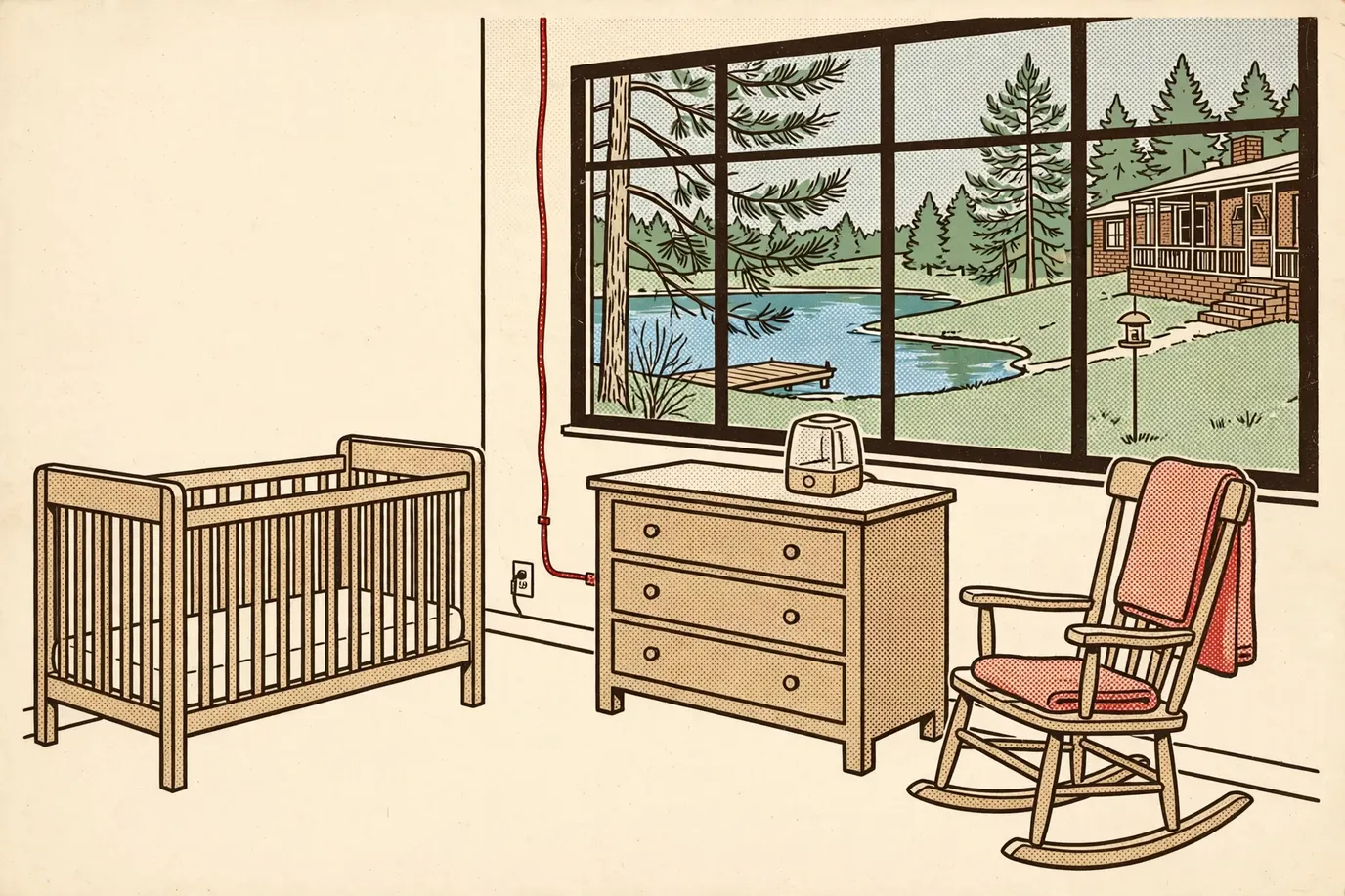
MedlinePlus says to keep a humidifier several feet, about 2 meters, from the bed. In a nursery, that means across the room from the crib, not on a shelf beside it. The other placement points are about the machine and the room:
- A sturdy, flat surface at the height the manual allows
- Out of a child's reach, including when that child starts pulling up on furniture
- The cord run along the wall behind furniture, never across the floor or near the crib
- Away from curtains, walls and wood furniture, so moisture doesn't settle on them
- Where you can refill it without moving anything else in the dark
If the floor or the dresser top gets damp around the unit, it's set too high or sits too close to something. Turn it down or move it.
Cleaning a baby humidifier
Every humidifier holds standing water, and standing water can grow bacteria and mold if it sits. The cleaning is the part of owning one that matters most.
The EPA's guidance for portable units:
- Every day: unplug the unit, empty the tank, wipe it dry and refill with fresh water
- Every third day: clean it and remove any scale or film
- After any cleaner or disinfectant: rinse the tank thoroughly
MedlinePlus goes a step further for its readers and says to drain and clean the unit every day. Both say to follow the maker's instructions for cleaning and storage. If your manual and these sources differ on a detail for that machine's parts, the manual covers the machine.
On water, MedlinePlus advises distilled water instead of tap water to limit mineral buildup. The EPA calls distillation the most effective method for removing minerals. It also says bottled water labeled spring, artesian or mineral has not been demineralized. Two units on this list, the AEOCKY and the Homedics, list a demineralization cartridge. The EPA says to use those only if the maker supplies or recommends them, and to watch for white dust as a sign minerals are getting through.
Essential oils come up in several listings on this page. This page doesn't advise on using oils in a baby's room. Ask your pediatrician before you add anything to the water or the oil tray, and follow the maker's manual on where oil can go.
When to stop and ask
The EPA says that if anyone develops symptoms they associate with using a humidifier, stop using it and talk to a doctor, even if the unit has been kept clean. If you're buying a humidifier because of a question about your baby's breathing, skin or sleep, ask your pediatrician first. A humidifier changes the air in the room. It isn't a treatment for anything.
Who should skip this list
If the nursery already reads 40 percent or higher on a gauge in winter, it doesn't need a humidifier. If the windows fog on cold mornings, the room needs less moisture, not more.
If nobody in the house will have time to clean a humidifier every few days, wait. A dirty humidifier in a small room is worse than none at all.
And if you're shopping for an adult bedroom, the bedroom humidifier list sorts by noise without the auto shut-off rule, and includes a few more models.
How we picked
This list takes every cool-mist or evaporative humidifier in our data whose maker or Amazon listing states an automatic shut-off and a noise level in decibels. Warm-mist and steam models are left out on purpose. Products are sorted quietest stated level first. Ties stay in a fixed order so the list doesn't shuffle between visits.
All specs come from the maker or the listing as of October 31, 2026. We don't test products, we don't rank by star ratings, and we don't say any product helps a baby's health. The list is checked every week, so the order can change. Prices aren't shown on this site. "Check price" opens the current listing.
Cool mist, auto shut-off, across the room from the crib, cleaned on schedule. Then ask your pediatrician anything that isn't about the machine.